Topic 2 of 5
Operations
Last reviewed
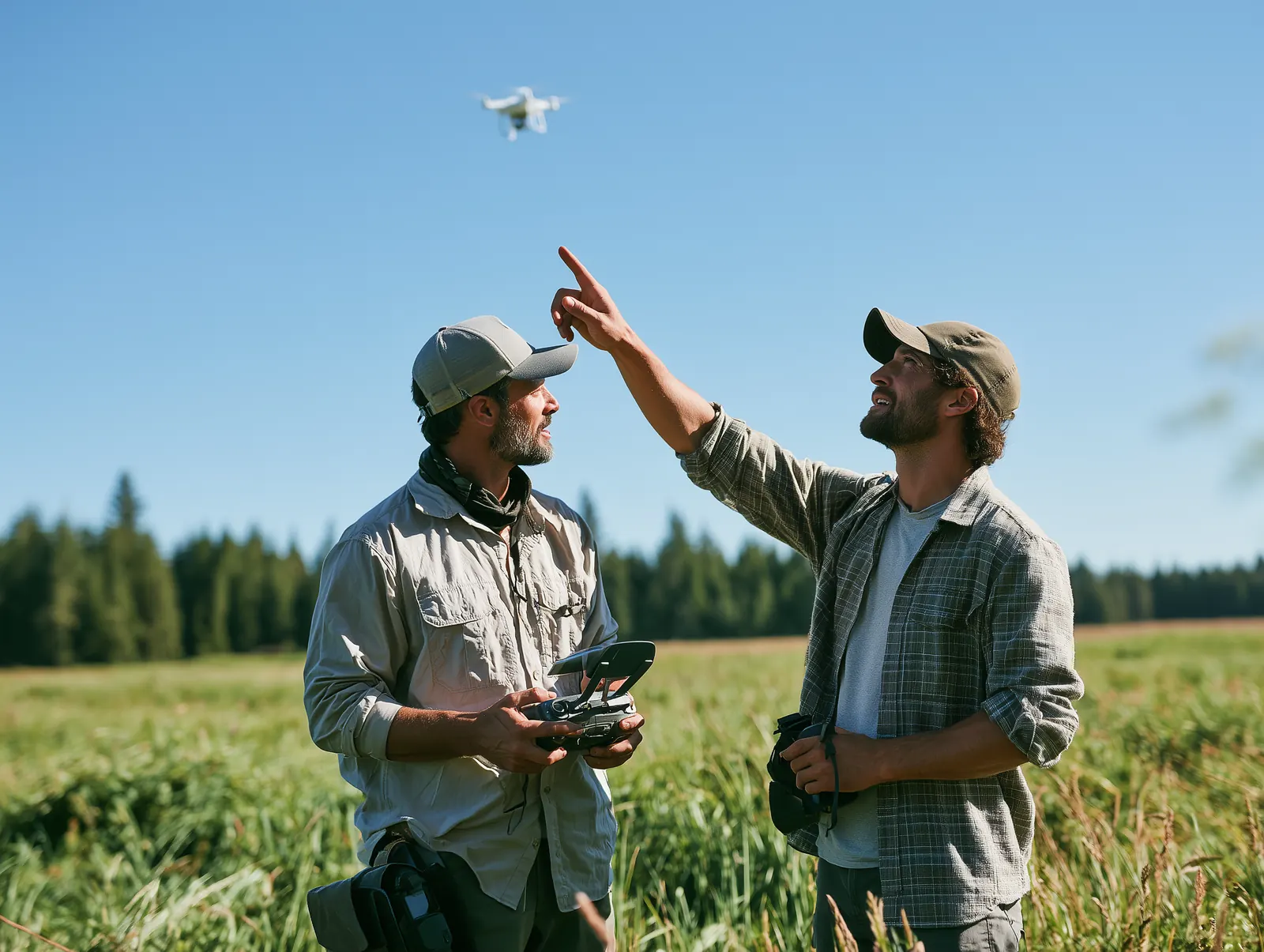
Operations questions are about how you run a flight safely: what you check before takeoff, who is in charge, how the crew works together and how you make decisions when things change.
Before every flight
Check that the drone is in a condition for safe operation before each flight, and stop if it no longer is (14 CFR 107.15). Before flight you must also assess the local weather, the airspace and any flight restrictions, the people and property on the ground and other hazards; brief everyone taking part on the plan, emergency procedures and their roles; check the control link; make sure there is enough power for the planned flight; and make sure anything attached to the drone is secure (14 CFR 107.49).
Who is in charge
The remote pilot in command is directly responsible for, and the final authority on, the operation. They must make sure the drone poses no undue hazard to people, aircraft or property if control is lost (14 CFR 107.19).
If you use a visual observer, the pilot, the person on the controls and the observer must be able to talk to each other at all times and work together to scan the sky for hazards (14 CFR 107.33).
Emergencies
In an in-flight emergency that needs immediate action, you may deviate from any Part 107 rule as far as needed, then send a written report if the FAA asks for one (14 CFR 107.21). The FAA study guide gives the example of a battery fire, where climbing above 400 feet to reach a safe landing spot may be the right call (FAA Remote Pilot Study Guide, p. 35).
Fit to fly
You may not fly, or act as a crew member, if you know or have reason to know of a physical or mental condition that would interfere with safe operation (14 CFR 107.17). Alcohol and drug rules apply too (14 CFR 107.27).
Decision-making
Aeronautical decision-making (ADM) is a systematic way to judge risk and choose the best course of action. The FAA study guide says most aviation accidents are related to human factors (FAA Remote Pilot Study Guide, p. 51). Crew resource management means using all your resources, including people, equipment and information, to make good decisions (FAA Remote Pilot Study Guide, p. 51).
Drone pilots aren't expected to talk on aviation radio, but understanding radio language and listening to the local frequency helps you know what manned aircraft are doing nearby (FAA Remote Pilot Study Guide, p. 39).
Learn mode
Practice questions
Pick an answer to see whether it's right, with the explanation and FAA source.
Beta: these questions haven't been reviewed by a certified remote pilot yet. Spot a mistake? Report it.
Questions 1-10 of 63
Ready for a mixed set?
Take 20 questions from every topic and get a score with explanations.
Take the free test