Topic 5 of 5
Loading and performance
Last reviewed
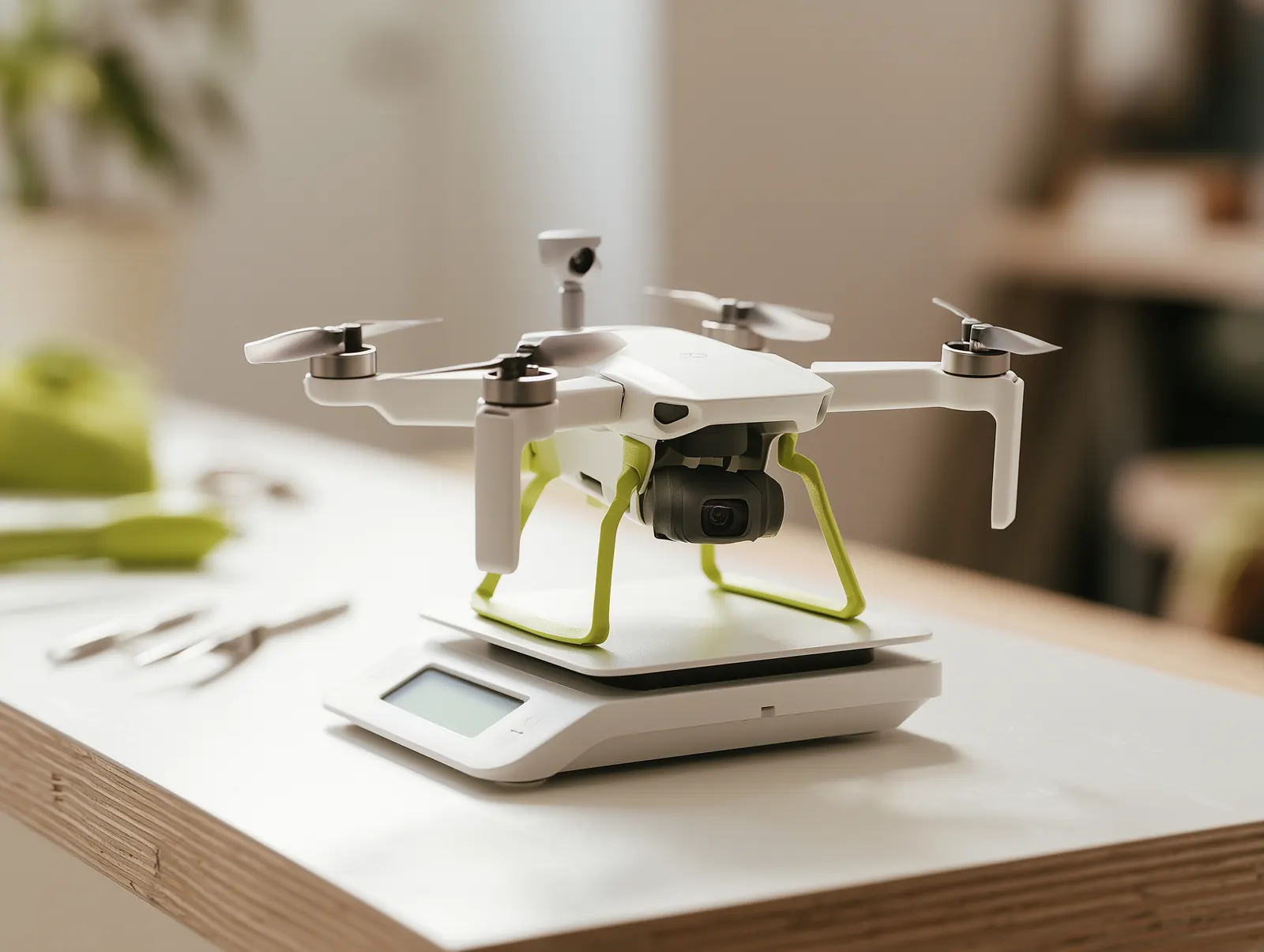
This topic is about how what you carry, and the air you fly in, change what your drone can do. It's a small share of the test, but the ideas are quick to learn.
Weight
Follow the manufacturer's weight and balance limits. Even at or below the maximum takeoff weight, hot, high or humid conditions (high density altitude) may mean you need to carry less (FAA Remote Pilot Study Guide, p. 29). Extra weight makes the aircraft fly at a higher angle of attack, adds drag and leaves less spare thrust for climbing (FAA Remote Pilot Study Guide, p. 22).
Balance
The center of gravity (CG) isn't a fixed point: it depends on how the weight is spread out, and it moves when a load shifts or is dropped. If the CG is outside the allowed limits, move or remove weight before you fly (FAA Remote Pilot Study Guide, p. 29). Flying with the CG outside the approved limits makes the aircraft hard to control (FAA Remote Pilot Study Guide, p. 32).
Part 107 also requires you to make sure anything attached to or carried by the drone is secure and doesn't harm its flight characteristics or controllability (14 CFR 107.49).
Load factor
Load factor is the extra stress on the aircraft when it turns or pulls up, measured in Gs. A load factor of 3 means the structure carries three times the aircraft's weight (FAA Remote Pilot Study Guide, p. 30). In a level turn at a 60 degree bank, the load factor is 2 Gs, and it climbs very quickly beyond about 45 to 50 degrees (FAA Remote Pilot Study Guide, p. 31).
Stall speed rises with the square root of the load factor, so an aircraft can stall at a speed that seems safe during a steep turn or sudden pull-up (FAA Remote Pilot Study Guide, p. 31).
Air density
As air density decreases (higher density altitude), performance decreases. Higher temperature and higher humidity both make the air less dense (FAA Remote Pilot Study Guide, p. 21-22).
Learn mode
Practice questions
Pick an answer to see whether it's right, with the explanation and FAA source.
Beta: these questions haven't been reviewed by a certified remote pilot yet. Spot a mistake? Report it.
Questions 1-10 of 24
Ready for a mixed set?
Take 20 questions from every topic and get a score with explanations.
Take the free test